When you start planning a kitchen renovation, stock cabinets and semi custom cabinets are two of the most common options you will encounter. While they can look similar in photos, the difference between them becomes clear once you begin designing around a real space.
The type of cabinetry you choose affects how well your kitchen fits your home, how much functional storage you gain, and how intentional the final design feels. Understanding this distinction early helps shape decisions about layout, budget, and the overall direction of your renovation.
What are stock cabinets?
Stock cabinets are manufactured in standard sizes and configurations. They are produced in fixed widths, heights, and depths, and offered in a set range of finishes and door styles. Because they are mass produced, stock cabinets are often readily available and can suit projects where speed and simplicity are priorities.
Stock cabinets tend to work best in kitchens with very straightforward layouts where standard sizing fits the room well. In these situations, they can provide a functional starting point.
Where stock cabinets become limiting is when a kitchen has irregular walls, older construction, larger appliances, or more complex storage needs. Since cabinet sizes cannot change, the design must adapt to the cabinets rather than the cabinets adapting to the space.
With stock cabinetry, this often shows up in areas such as:
- Cabinet runs that require fillers at the ends or beside appliances to make standard sizes fit.
- Tall cabinets that stop short of the ceiling, leaving unused space above.
- Islands that must be sized around available cabinet boxes rather than circulation needs or seating comfort.
- Base cabinets that rely primarily on shelves behind doors instead of drawer based storage.
- Fewer built in solutions for pantry organization, waste systems, or specialty storage.
What are semi custom cabinets?

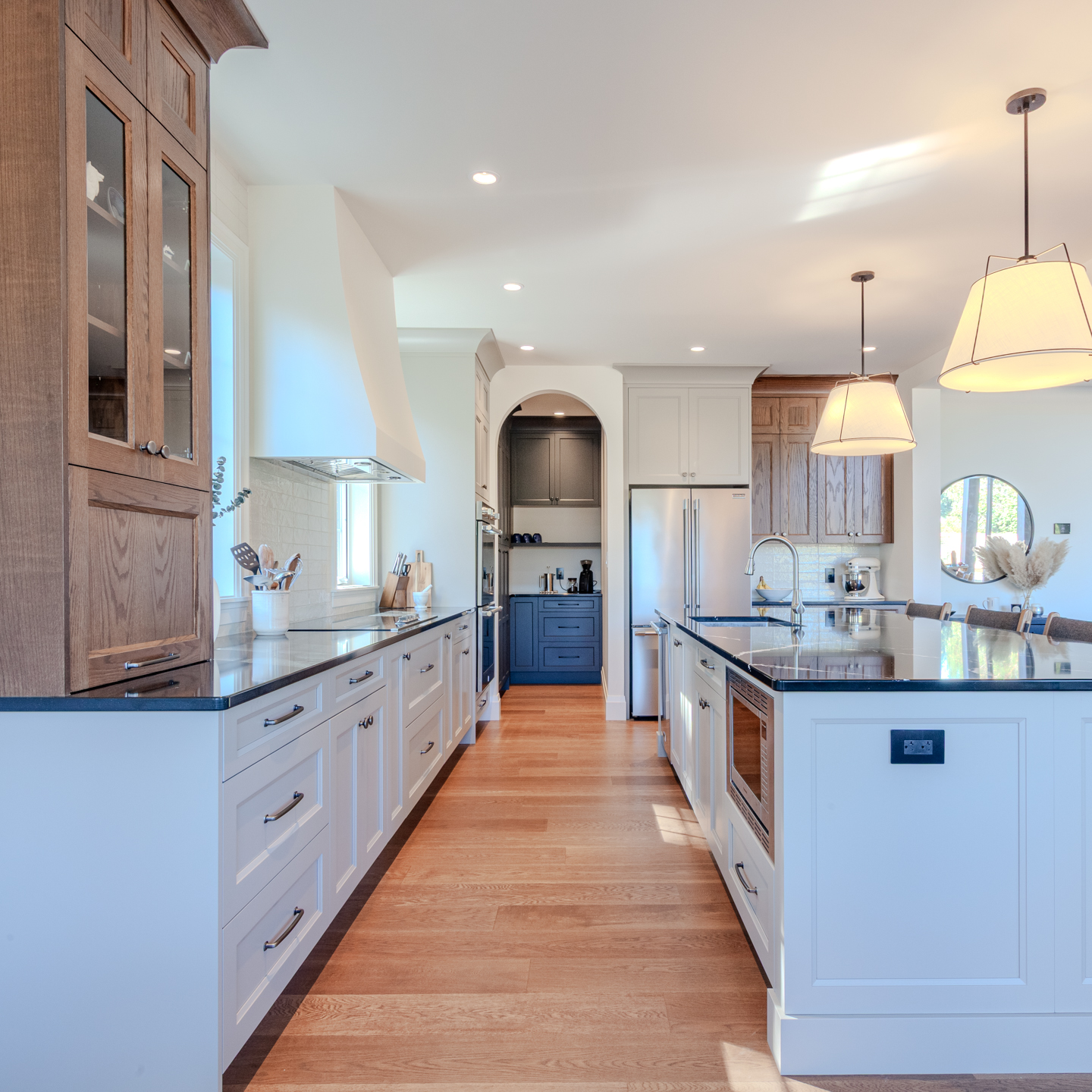
Semi custom cabinets are built to order rather than pulled from pre made inventory. Instead of choosing only from fixed cabinet sizes, the cabinetry is produced specifically for your project, allowing dimensions and configurations to be adjusted to suit the room.
In practical terms, this means cabinet widths can be fine tuned to reduce fillers, tall cabinets can be sized to better suit ceiling heights, and layouts can be planned around appliances and architectural features rather than forcing everything into standard increments. These decisions are made during the design stage, which allows cabinet sizing, spacing, and storage planning to support how the kitchen will actually function once it is in daily use.
With semi custom cabinetry, this flexibility typically shows up in areas such as:
- Tall pantry and wall cabinet units that are sized to the room, improving both vertical storage and the overall proportions of the kitchen.
- Island cabinetry that can be adjusted for seating depth, circulation space, and appliance placement, instead of being limited to standard box dimensions.
- Base cabinets designed as functional drawer systems, supporting everyday storage like dishes, cookware, and food prep tools.
- Purpose built cabinet sections for trays, spices, and pantry storage, so frequently used items are placed intentionally within the layout.
- Sink base cabinets configured to properly house waste, recycling, and compost systems, positioned where prep and cleanup actually happen.
What this means when designing your kitchen
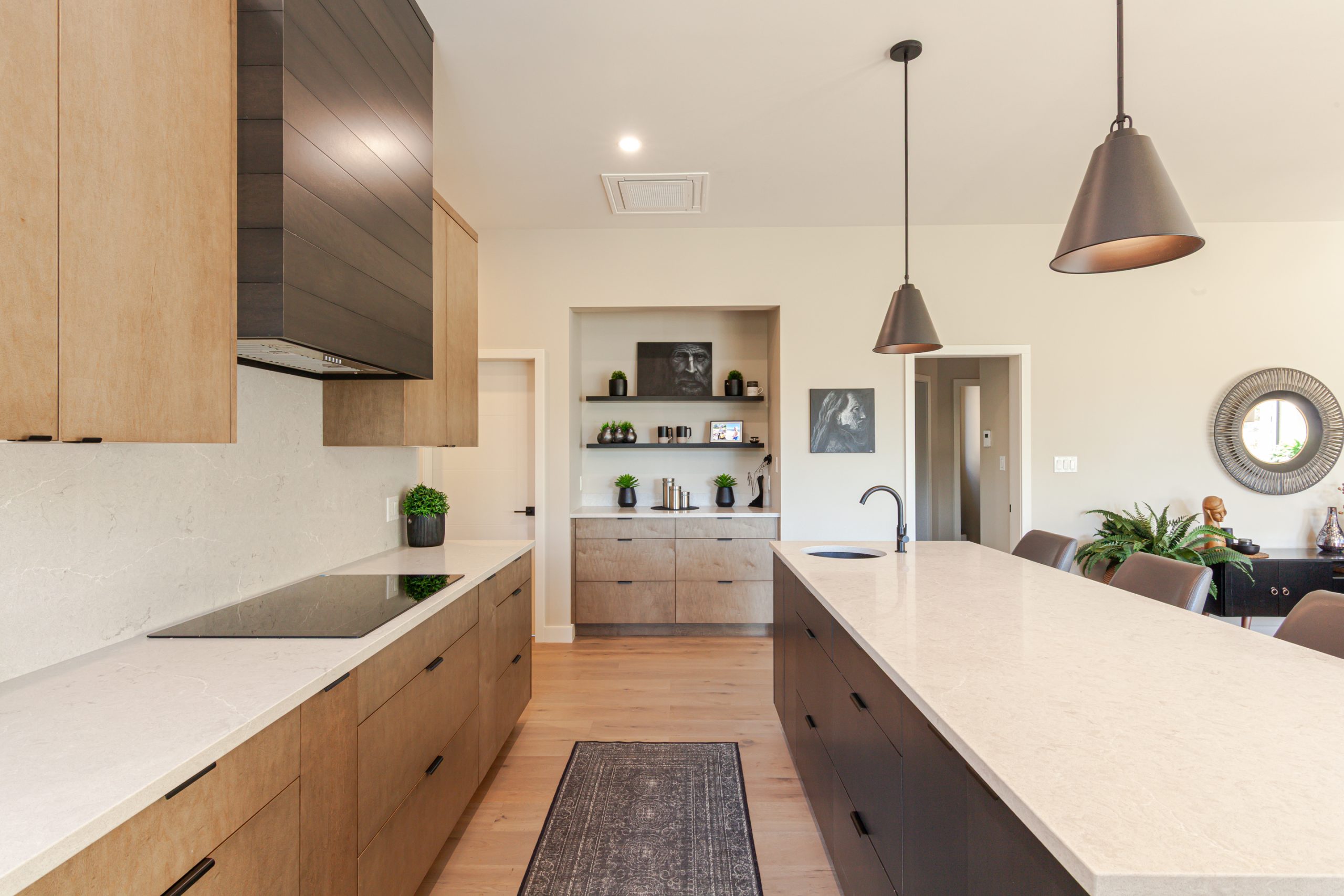
In most renovation projects, kitchens rarely match standard cabinet dimensions perfectly. Walls are often not square. Ceiling heights vary. Appliances do not always align neatly with stock cabinet sizing. Islands, window placements, and circulation paths all introduce design challenges that do not show up in catalogue drawings.
With stock cabinets, these conditions are usually handled with fillers, additional panels, or layout adjustments that prioritize what fits rather than what functions best.
With semi custom cabinetry, cabinet sizing can be adjusted to improve visual balance, create cleaner transitions between elements, and make more efficient use of available space. Storage can be located where it supports everyday tasks instead of where a standard cabinet happens to fit.
Over time, these differences influence how easy the kitchen is to work in, how organized it remains, and how cohesive it feels as part of the home.
Balancing budget, quality, and long term value

Stock cabinets generally come with a lower entry cost and can make sense for kitchens where the layout is simple and the renovation goals are modest.
Semi custom cabinetry requires a higher investment, but it also provides more control over fit, storage, and finish. Better use of space can reduce wasted areas. Thoughtful organization improves everyday efficiency. Finish and door style flexibility allow the cabinetry to align more closely with the home’s architecture and long term design goals.
For many homeowners, the value of semi custom cabinetry is reflected not only in how the kitchen looks when it is finished, but in how well it continues to function and feel as daily life unfolds in the space.
Choosing the right cabinets for your renovation
There is no single cabinet choice that fits every project. The right solution depends on the conditions of your home, how complex your layout is, and how important tailored storage and design details are to you.
Understanding the practical differences between stock and semi custom cabinetry allows you to approach your renovation with clearer expectations, stronger priorities, and more productive conversations from the very beginning.
Ready to start planning your kitchen?
At Classic Kitchens and Design, we carry semi custom cabinetry from Merit Kitchens, our exclusive cabinet manufacturer, and Lectus Cabinets.
Visit our Nanaimo or Parksville showrooms to compare cabinet styles, door profiles, colours, and finishes in person, and to look closely at the details that matter in daily use. You can also explore storage features and accessories so you can see how different cabinet configurations will actually function in your own kitchen.