When homeowners first start planning a kitchen renovation, the questions rarely arrive in a clear order.
You might know the kitchen no longer works the way it used to. Cabinets feel dated. Countertops are worn. Storage is frustrating. What is often less clear is where to begin.
Should you start by choosing kitchen cabinets?
Should countertops be selected early because of lead times?
Or does the order depend on the layout of the kitchen itself?
This is a common question for homeowners in the early research stage, and it usually signals that the project needs structure before individual selections are made.
Why Homeowners Ask This First
Kitchen cabinets and countertops are two of the most visible elements in a kitchen. They are also the most discussed in showrooms, online searches, and renovation inspiration.
For homeowners still in the research phase, it’s natural to gravitate toward the most visible parts of the kitchen. Cabinets and countertops are familiar. They’re easy to picture, easy to compare, and easy to collect inspiration for, especially when the overall scope of the renovation is still taking shape.
Looking at finishes can feel like forward momentum. Saving images feels productive. Decisions start to feel tangible.
The issue isn’t that this instinct is wrong. It’s that these choices are often made before the kitchen itself has been clearly defined. Without a clear layout and framework in place, early selections can introduce more uncertainty instead of reducing it.
What Actually Defines a Kitchen Layout

Before deciding whether cabinets or countertops should come first, it helps to understand what actually defines the structure of a kitchen renovation.
Kitchen cabinetry establishes the physical framework of the space. Kitchen countertops respond to that framework. Their size, shape, edge details, and installation all depend on what the cabinetry allows.
Cabinet design and dimensions determine:
- where countertops sit
- how much overhang is possible
- where seams can realistically fall
- how appliances integrate into the layout
- how storage and workflow are organized
Why Choosing Materials Too Early Creates Confusion
Many people begin by researching types of kitchen countertops or cabinet finishes because they are familiar and visual.
The issue arises when selections are made before the kitchen layout and cabinetry are defined.
Without clarity on cabinet dimensions and configuration, countertop decisions are often based on assumptions. Those assumptions may change once the design becomes more specific.
This is where kitchen projects can start to feel overwhelming or disjointed, even before any work begins.
Why Kitchen Cabinets Are Typically Planned First

In most kitchen renovation projects, cabinetry is planned before countertops for practical reasons. Cabinet design establishes the underlying structure of the kitchen and defines how the space will function overall.
Cabinet design establishes:
- the layout of the kitchen
- storage capacity and organization
- appliance placement and clearances
- proportions and visual balance
When Countertops Enter the Conversation
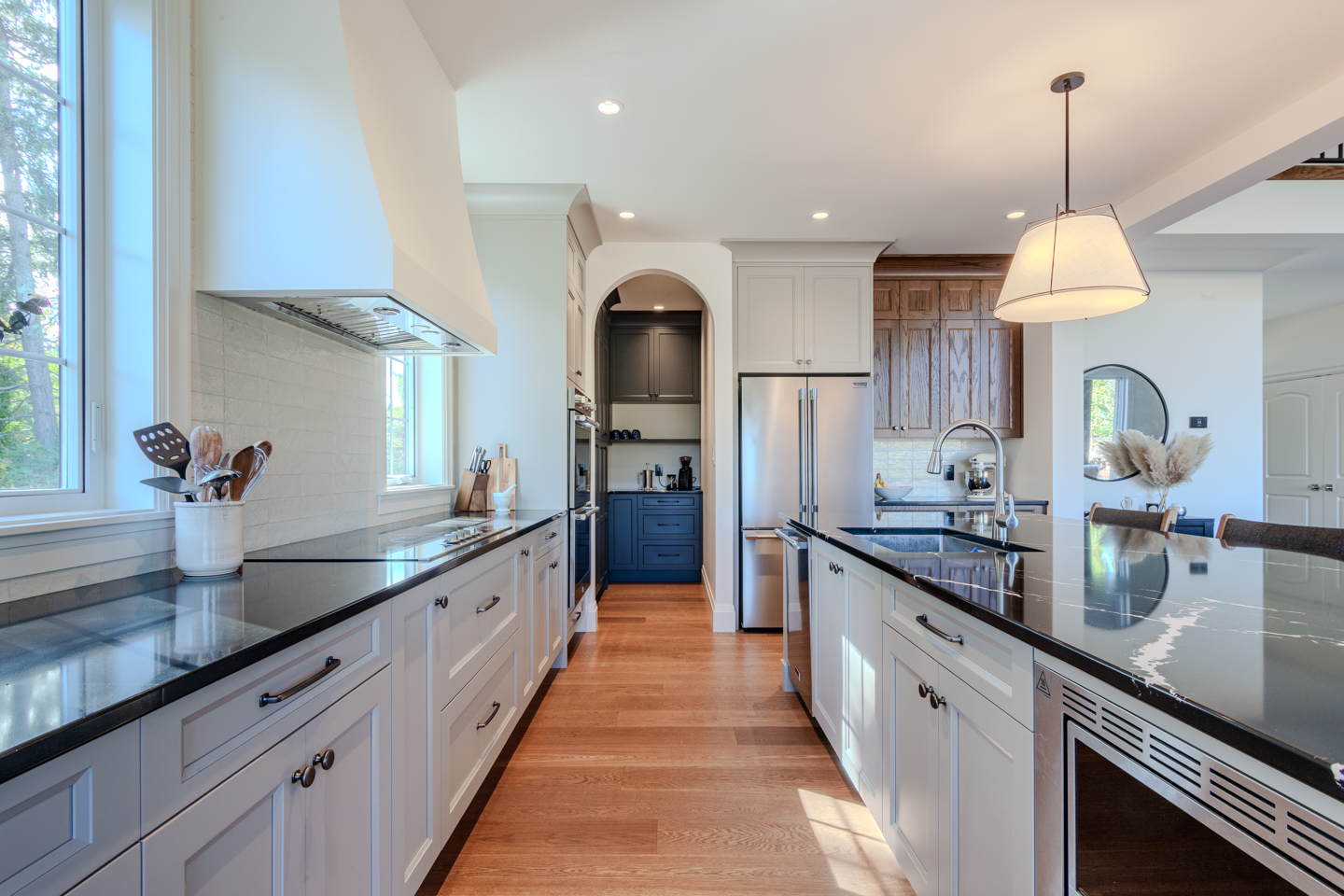
This does not mean countertop materials are ignored early on.
General preferences around quartz, granite, porcelain, or other surfaces can be discussed early to ensure they align with how the kitchen is being designed. In some cases, material requirements may influence cabinet detailing or support considerations.
The difference is that these conversations inform the design.
Where to Start If You’re Still in the Research Phase

If you are early in the kitchen planning process and unsure where to begin, that usually means decisions are being considered out of sequence. Before finishes or materials are selected, the kitchen itself needs to be understood.
This early stage is about establishing a foundation so that later decisions around kitchen cabinets and countertops are intentional rather than reactive. For many homeowners, this is also the point where working with a kitchen design team shifts the process from collecting ideas to establishing direction.
That foundation includes understanding:
- how the space currently functions
- how it connects to adjacent rooms
- what constraints exist structurally
- what needs to improve for daily use
Book a Kitchen Design Consultation
When you are still in the early stages of planning, gaining clarity before committing to selections can make the entire process smoother. Understanding how your kitchen functions, what constraints exist, and how cabinetry and countertops should work together creates a stronger foundation for every decision that follows.
If you are beginning to explore updates to your kitchen and are unsure where to start, a design consultation can help establish that direction and determine what approach makes the most sense for your space.
Contact our Nanaimo or Parksville showroom to get started.
